Excuse Me?
Here’s how to find people to test your product.

User testing is simultaneously my most dreaded and favorite part of any project. At its most appealing, user testing is where we identify friction with our product so we can refine it in subsequent iterations.
Because my co-creator Alan & I spent hundreds of hours playtesting rough, clunky versions of our game eckso with strangers, our confidence is extremely high. After dozens of feedback-powered iterations, players consistently want to keep playing, and spectators often ask where they can buy it.1 Winner!
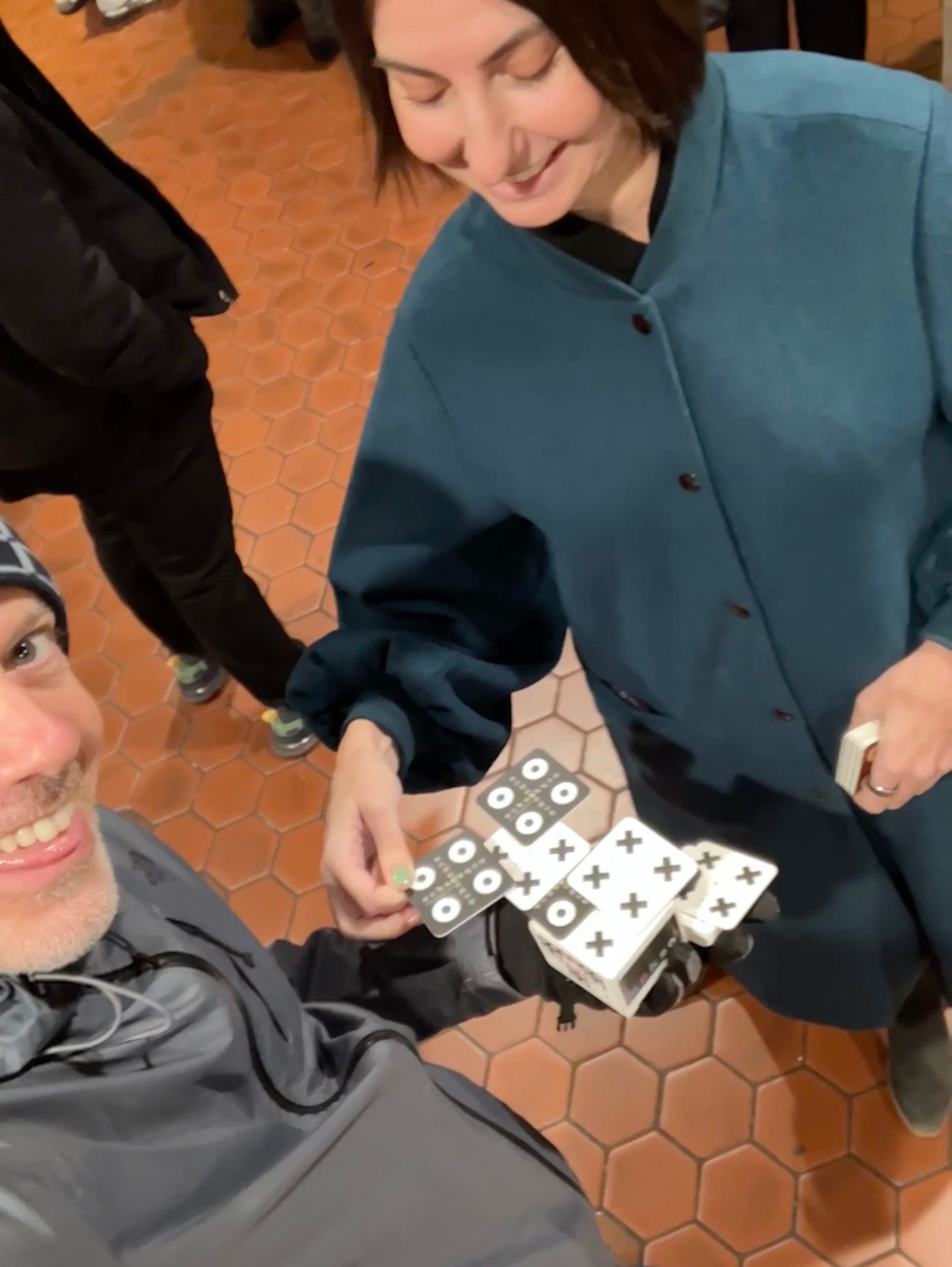
At the same time, I won’t pretend that it’s easy to approach strangers. Getting myself out the door to begin user testing requires serious pep-talking. I’m not immune to the disappointment of rejection, nor do I relish watching people get frustrated trying to use something that I thought they’d enjoy.
I’m gearing myself up for a season of user testing for Zenmo2 right now, literally as I type this. Yes, we’ve been testing the concept with users since we dreamed it up last summer, but not with the regularity it deserves. The need for more frequency was a major takeaway from our recent cofounders’ retreat.
External validation is EXTREMELY important for product development. It’s a funny thing to hear out of context, but only when we confirm that we are creating value for our users will we achieve our goals of social benefit and profitability. Whether or not we like it is immaterial.
More validation, please!
To that end, here are three simple techniques that I teach in my role as a professor of “Innovative Thinking” (ENES 665) at the University of Maryland.
Schedule one-on-ones with friends. Your friends want to help you. It’s part of the “friend” job description, n’est pas? Reach out directly and invite them to a one-on-one session, either via Zoom or over a drink or a meal (your treat). Be super generous with your appreciation for their focused attention; it’s their most precious commodity, after all. Remember that timing is everything, and don’t take it personally if they can’t make it work this time.
Approach randos at a bar. There are three basic categories of patrons on a Tuesday night:
Solo folks, generally sitting at the bar because it’s nicer being around friendly chatter than sitting alone at home. Or, perhaps they’re waiting for a friend to show up. Either way, their openness to a boredom alternative is typically high.
Couples on dates, often eager for creative diversions from their awkward get-to-know-you small talk. Help them create a shared memory!
Groups of 4-5, in which members can balance each other’s strong reactions with encouraging counterpoints.
I approach with a simple “Excuse me,” follow by a succinct “I’m testing a new ____ for my friend3 to find out if the latest feature is easy to understand. Do you have five minutes to try it out? It’s okay if you don’t.”4
Set yourself up at relevant venues. Any reputable toy/ game store will have open sessions for community members to get together.5 Board-games-themed bars are also easy to find: here in D.C., The Board Room (Connecticut Ave) and Breadsoda (Wisconsin Ave) are the two I visit most often. Regional gaming conferences6 are rife with friendly, open-minded game lovers, too. You can even create your own venue: I started a regular board game night in my apartment building’s “activity room” every Monday night. My primary motivation was honestly my passion for playing—Sushi Go, Ticket to Ride, and Flip 7 are recurring favorites within the group—but I never hesitate to invite attendees to try a round or two of my own work-in-progress games.
Obviously, the list of places to find user testers does not end here. Please add a comment if you have suggestions, we’d love to hear them.
--
If you think your organization could benefit from a deeper dive on the BrainSpin Method, send me a DM, and let’s chat. Meantime, you can find this week’s BrainSpin shape in the footnotes.7
We’re giving exclusive access to collectible silver-foil “Deluckso” cards when you sign up on our pre-release website.
Zenmo is my startup, built around an app that helps people think with color. 🌈
Technically, the friend is me (hashtag self love!). Creating a little distance between you and the product can make it feel safer for your tester share honestly, especially if they don’t like your thing.
It’s good etiquette to make it clear that a “No” is okay. You’re looking for consent, not compliance. If the timing is bad but they succumb to people-pleasing pressure anyway, the interaction will not serve either of you. Plus, pre-approving the inevitable “No’s” you receive can aid in reducing their sting.
Shout-out to Thursday nights at Labyrinth on Pennsylvania Ave!
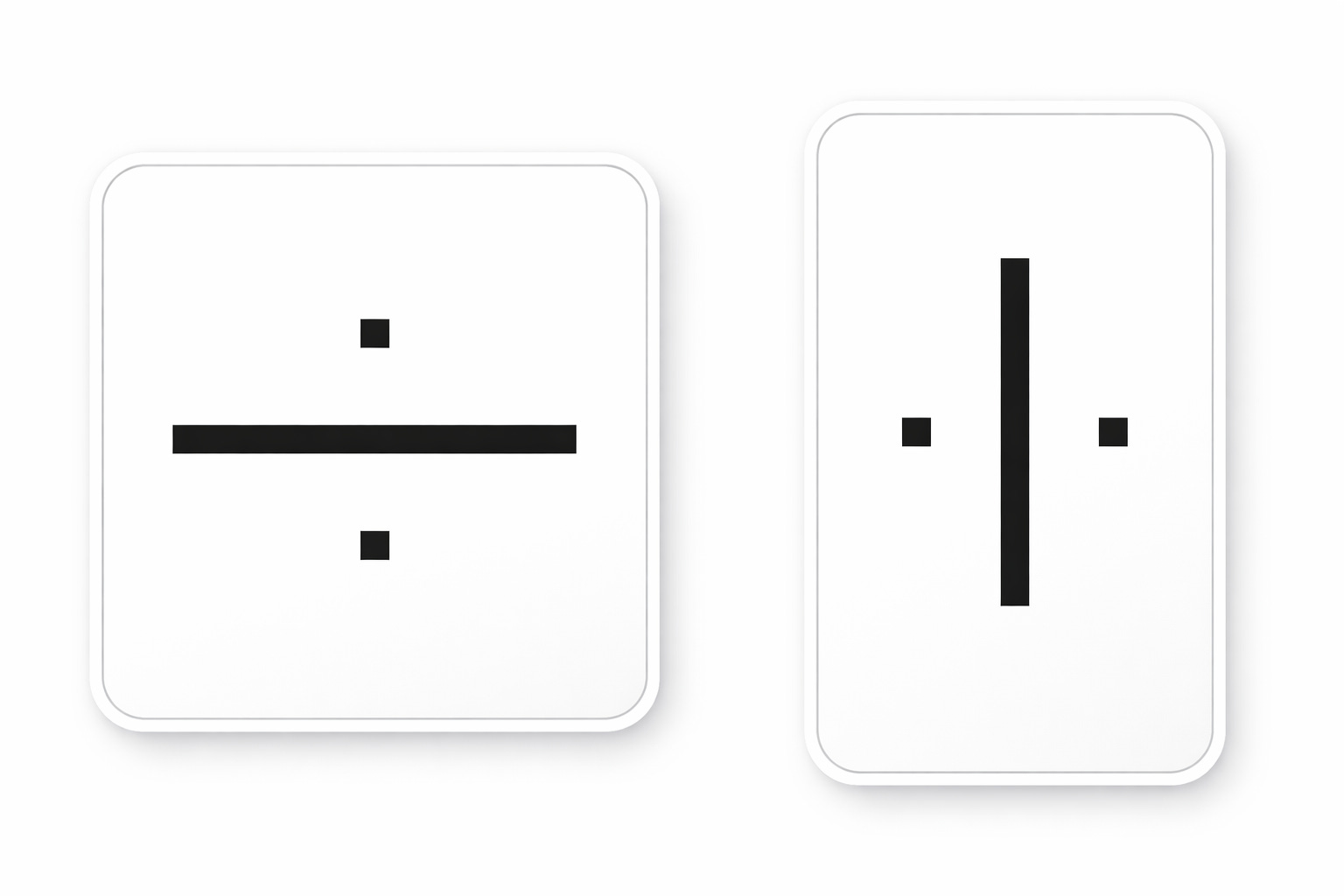
mathematical division symbol/ that video game pong/ front of norse helmet with nose protector strip/ moon reflected in lake/ magnetic levitation/ top-down view of bank teller visit/ one-legged skier, viewed from below // What do you see when you look at this shape? Drop more answers in the comments.